By Michael Leidig
The latest row to blow up in Salzburg, where the region’s first wind turbines are still years away despite growing political agreement to allow them, is a microcosm of the wider clash between tourism and the need for power.
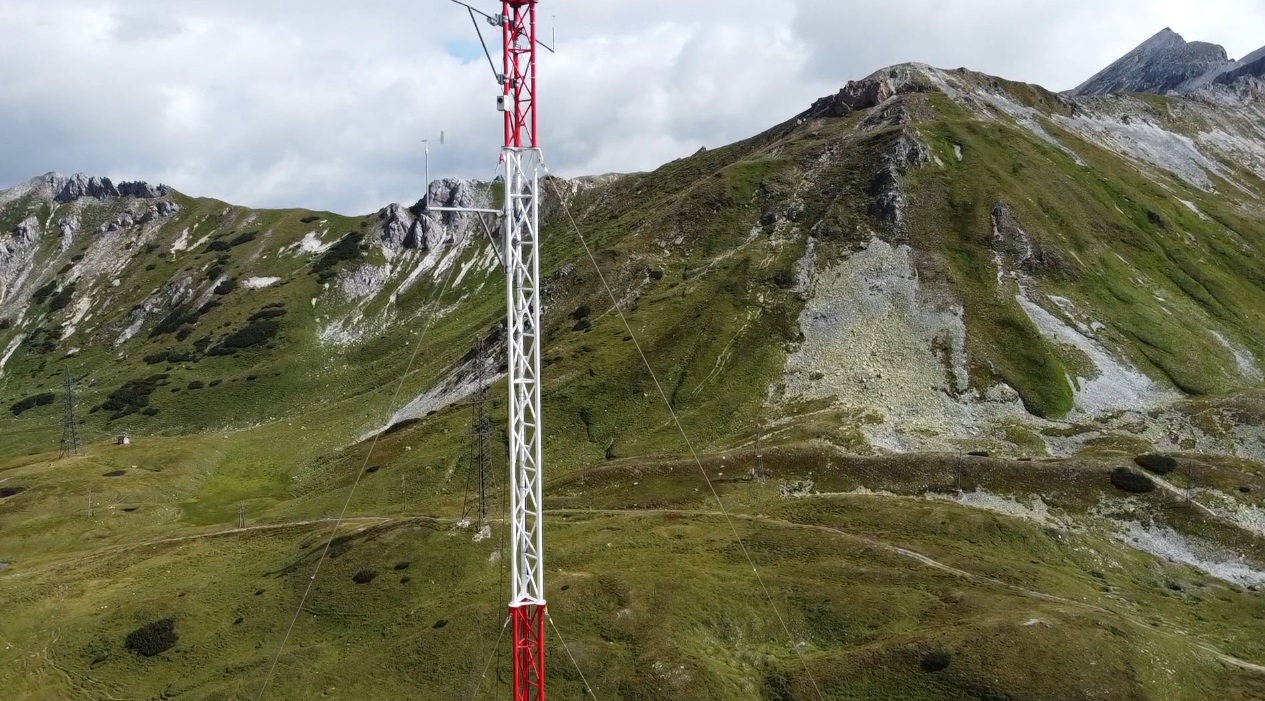
The dispute centres on the Windsfeld area between Pongau and Lungau, two alpine districts in the province of Salzburg, in western Austria, where 12 wind turbines are planned.
Former Salzburg governor Wilfried Haslauer had wanted the first masts to be standing and producing electricity by 2028, but that target now looks certain to be missed, with environmental checks, possible appeals and the practical problems of building in alpine terrain still standing in the way.
Salzburg still does not have a single commercial wind turbine, even though wind power has been part of Austria’s national energy debate for decades, and the province has long been caught between two competing pressures: the need for clean, local power and the fear that giant turbines could damage the alpine scenery on which tourism depends.
The planned Windsfeld project, between Flachau and Zederhaus, is currently one of the most advanced wind schemes in Salzburg, but a final decision from the environmental impact assessment is still pending.
That means the project remains years away from producing power, even though the political mood has shifted in favour of wind energy.
Salzburg’s black-blue state government now accepts that wind power will have to be part of the province’s future energy mix, with FPÖ planning councillor Martin Zauner, whose party had previously been strongly critical of wind power, now saying: “I am not setting up a prohibition zone.”
The comment marked a clear change in tone from a party that had long resisted wind turbines in alpine regions, but political acceptance does not mean the turbines can be built quickly.
Wind projects in Salzburg face problems that developers in eastern Austria do not have to deal with on the same scale, because in Lower Austria and Burgenland, where most of Austria’s wind turbines are located, the landscape is flatter, windier and easier to build on.
The Vienna Basin, the Weinviertel and northern Burgenland offer wide open spaces where wind can move across farmland and rolling hills with fewer physical obstacles, and those eastern provinces also began setting aside suitable zones for wind energy more than 20 years ago.
As a result, Lower Austria and Burgenland came to dominate Austria’s wind power sector while Salzburg and other western alpine provinces were left behind.
In Salzburg, the geography alone makes development much harder, with huge rotor blades and tower sections having to be transported up mountain roads that were never built for that kind of load.
Foundations have to be anchored into exposed alpine ground, often at high altitude and in difficult weather conditions, while access roads, construction areas and grid connections also have to be approved before a single turbine can start turning.
That is where the argument over tourism becomes unavoidable, because Salzburg and its neighbouring alpine regions sell themselves around mountain views, ski resorts, hiking routes and an image of untouched nature.
Opponents of wind power have long argued that 200-metre-high turbines on ridgelines would damage that image, while hoteliers, tourism operators and local critics fear visitors will not travel to alpine valleys and mountain resorts to look at what they see as industrial machinery.
Environmental groups and alpine associations have also raised concerns about the impact of construction work in sensitive mountain areas, and their objections are not only about the appearance of turbines.
Building them means cutting or widening access roads, moving heavy machinery through forests and alpine meadows, and disturbing areas that may be important for wildlife.
For supporters, however, the argument has changed sharply in recent years, with the energy crisis, higher power prices and the need to reduce dependence on fossil fuels making locally produced renewable power much harder to dismiss.
Climate change has also weakened the old tourism argument because warmer winters and less reliable snow now threaten the ski industry that opponents of wind turbines have long sought to protect.
Supporters say Salzburg cannot keep presenting itself as a modern, environmentally conscious region while leaving the burden of wind power to other parts of Austria.
Austria’s wider energy history also helps explain why the debate is so sensitive, because the country famously built a completed nuclear power plant at Zwentendorf, in Lower Austria, in the 1970s.
But the plant never went into operation after Austrians narrowly voted against nuclear power in a referendum on 5 November 1978, leading to Austria’s permanent rejection of nuclear power and forcing the country to rely heavily on hydropower, fossil fuels and later renewable sources such as wind and solar.
Hydropower remains crucial in Austria, especially in alpine provinces, but it cannot cover every future demand, particularly as climate targets and energy security concerns increase pressure for more renewable generation.
That is why Salzburg’s lack of commercial wind turbines has become harder to justify politically.
Haslauer’s 2028 target was supposed to show that the province was finally ready to move beyond years of hesitation, but the current position shows how slowly such projects move even after political resistance begins to soften.
Support from the state government removes one obstacle, but it does not remove the environmental assessment, local objections or the physical challenge of building wind turbines in the mountains.
The result is that Salzburg’s first wind power now appears unlikely before the 2030s.
For the province, the Windsfeld project has become more than a local planning dispute, because it is a test of whether one of Austria’s most famous alpine regions can accept visible renewable energy infrastructure in landscapes that have long been treated as part of its tourism brand.
For now, the need for power and the need to protect the postcard image of Salzburg remain locked in the same fight.
Byline Journalist: Mike Leidig
Byline Spotter: Mike Leidig
Byline Commisioning Editor: Mike Leidig
Byline Senior Writer: Mike Leidig
Byline Copychecker: Angela Trajkovska
Byline Illustrator: Angela Trajkovska
Byline News Editor: Mike Leidig
Geography: St._Johann_im_Pongau_District
Subject: Business, Energy, Renewable, Wind, Environment
T4 Editor Story Rating: 8
T4 Editor Pic/Vid rating: 5
T4 Total rating: 6.5